

Physical Holistic Intelligence

Welcome to the official website of the PHI Lab! 

The Physical Holistic Intelligence (PHI) lab operates at the intersection of modern AI techniques and the governing laws of the physical world. We develop AI models for embodied machines that are truly physically consistent, inherently safe, explainable by design, and efficient. To bridge the gap between algorithmic abstraction and physical reality, our research builds on the synergy between pure data-driven models and inductive biases grounded in the rigorous mathematical foundations of differential geometry, control theory, optimal transport, and physics. 

We are part of the Italian Institute of Artificial Intelligence (AI4I), hosted at Officine Grandi Riparazioni (OGR) in the beautiful city of Turin. 

>
Research Cluster

01Physical-Geometric Learning & Architectures

We develop learning architectures that embed physical structure and geometric principles directly into their design, helping models reason consistently about the world they observe. By combining strong inductive bias with compact multimodal representations, we aim to build small but capable world and foundation models that learn efficiently from limited data, generalize beyond their training distribution, and transfer reliably across tasks and environments.

02Uncertainty-aware & Efficient Adaptation Methods

We develop principled methods for learning and adaptation that combine reinforcement learning, differential geometry, uncertainty quantification, and control. Geometric structure helps organize efficient policy learning, while explicit uncertainty estimates guide exploration and support safer decision-making. By incorporating physical and control-theoretic inductive biases, we aim to achieve reliable generalization and adaptation from limited interaction, including in complex and previously unseen environments.

03Safe and Robust
AI-driven
Control

We develop AI-driven control methods with explicit guarantees on safety, stability, and robustness. By combining control theory, generative modeling, and differential geometry, we design controllers and planning methods that remain reliable under uncertainty and stochasticity. Our goal is to equip learning-based systems with principled safety bounds and stability properties, enabling dependable decision-making and control in complex, dynamic, and safety-critical environments.

>
Featured Research

Contact Geometry for Generative Models: An Unbalanced Optimal Transport Formulation

A. Testa, S. Hauberg, A. G. Kupcsik, T. Asfour, L. Rozo

NeurIPS 2026

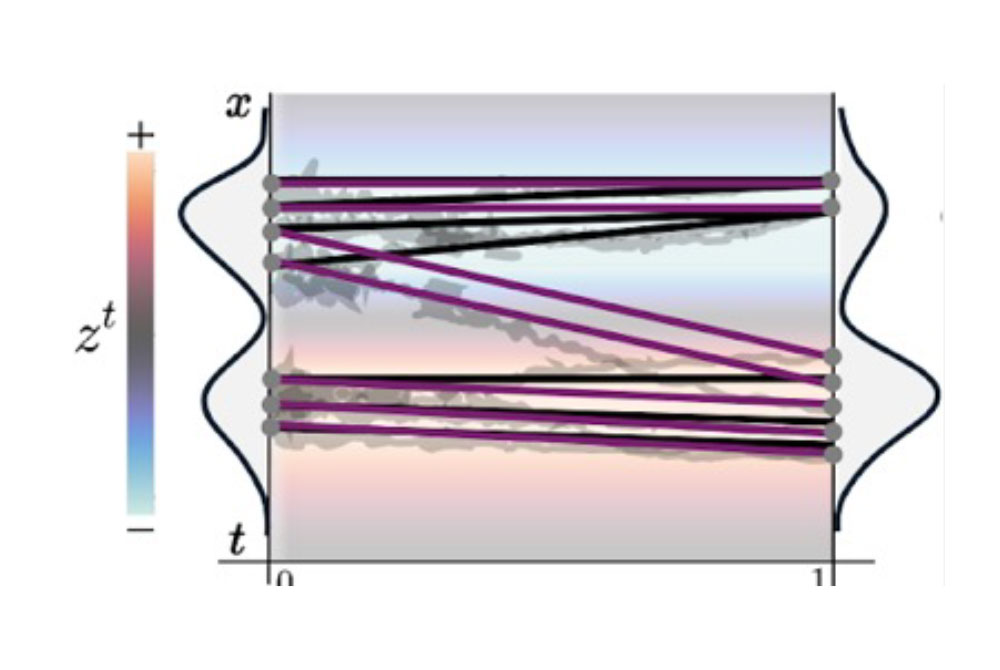
A contact-geometric framework for generative models formulated through unbalanced optimal transport.

Extended Neural Contractive Dynamical Systems: On Multiple Tasks and Riemannian Safety Regions

H. Beik-Mohammadi, S. Hauberg, G. Arvanitidis, G. Neumann, L. Rozo

The International Journal of Robotics Research, 2026

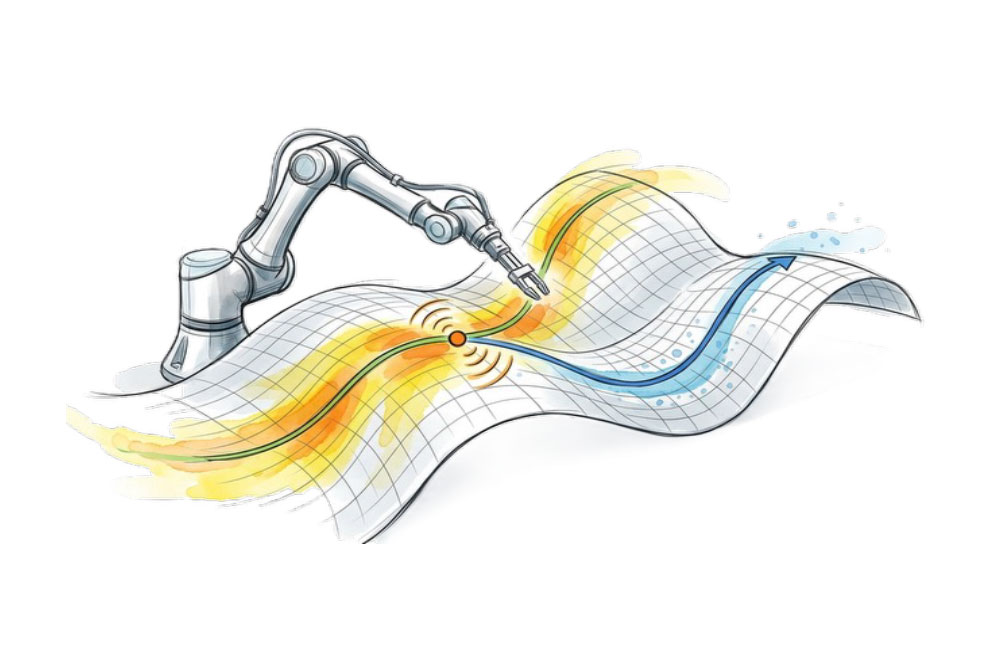
Extends contractive neural dynamics to multiple tasks and uncertainty-aware Riemannian safety regions.

Fast and Robust Visuomotor Riemannian Flow Matching Policy

H. Ding, N. Jaquier, J. Peters, L. Rozo

IEEE Transactions on Robotics, 2025

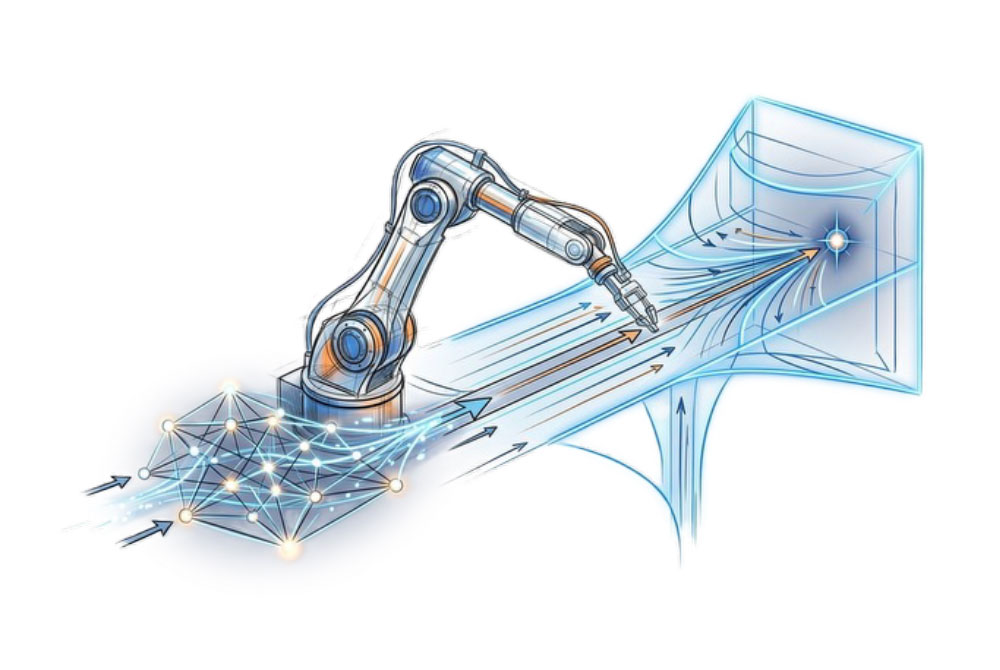
Introduces fast Riemannian flow-matching policies and a stable variant for robust visuomotor control.

>
Latest News

Leonel Rozo speaks on Physical AI and humanoid robots

PHI Lab director Leonel Rozo will join the Polo ICT Corporate Meeting as a keynote speaker. The event brings together research and industry to discuss how advanced robotics, sensing, and human-machine interaction are moving artificial intelligence into the physical world. It takes place at 14:00 at Villa San Quirico in Turin. Event details and registration
read more »

Andrea Testa paper accepted at NeurIPS 2026

A new paper authored by Andrea Testa has been accepted at NeurIPS 2026. The work was developed in collaboration with the Bosch Center for Artificial Intelligence, Karlsruhe Institute of Technology, and the Technical University of Denmark. NeurIPS 2026 conference    
read more »

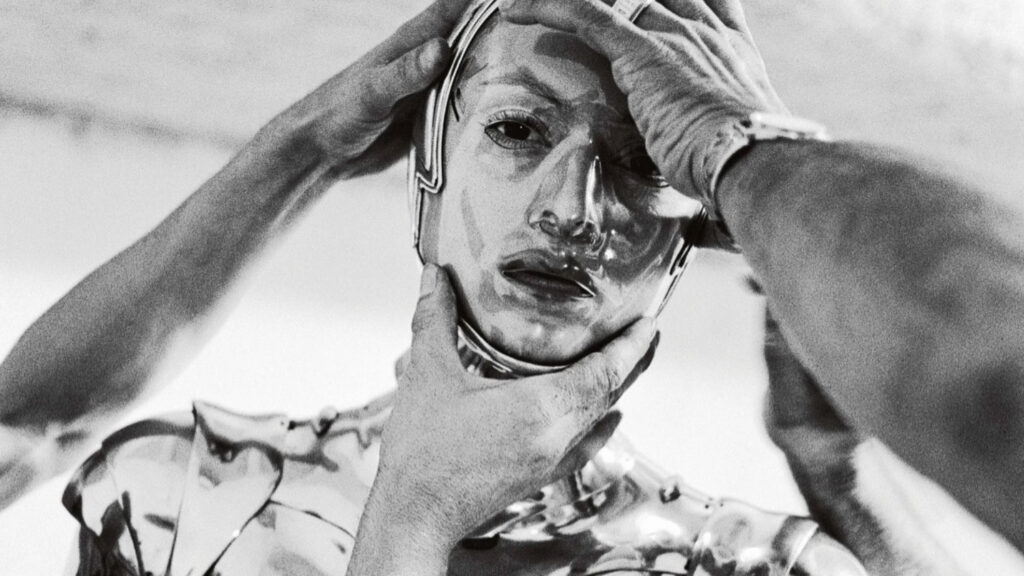
PHI in Vogue Italia: the intelligence of robotic hands

Vogue Italia explores the human hand as a model of physical intelligence and the challenge of giving robots comparable dexterity. PHI Lab director Leonel Rozo discusses the perception–action loop, tactile intelligence, and why capable robotic hands remain central to the future of humanoids. Read the Vogue Italia feature  

read more »