
Team
Principal Investigator
Email: leonel.rozo@ai4i.it
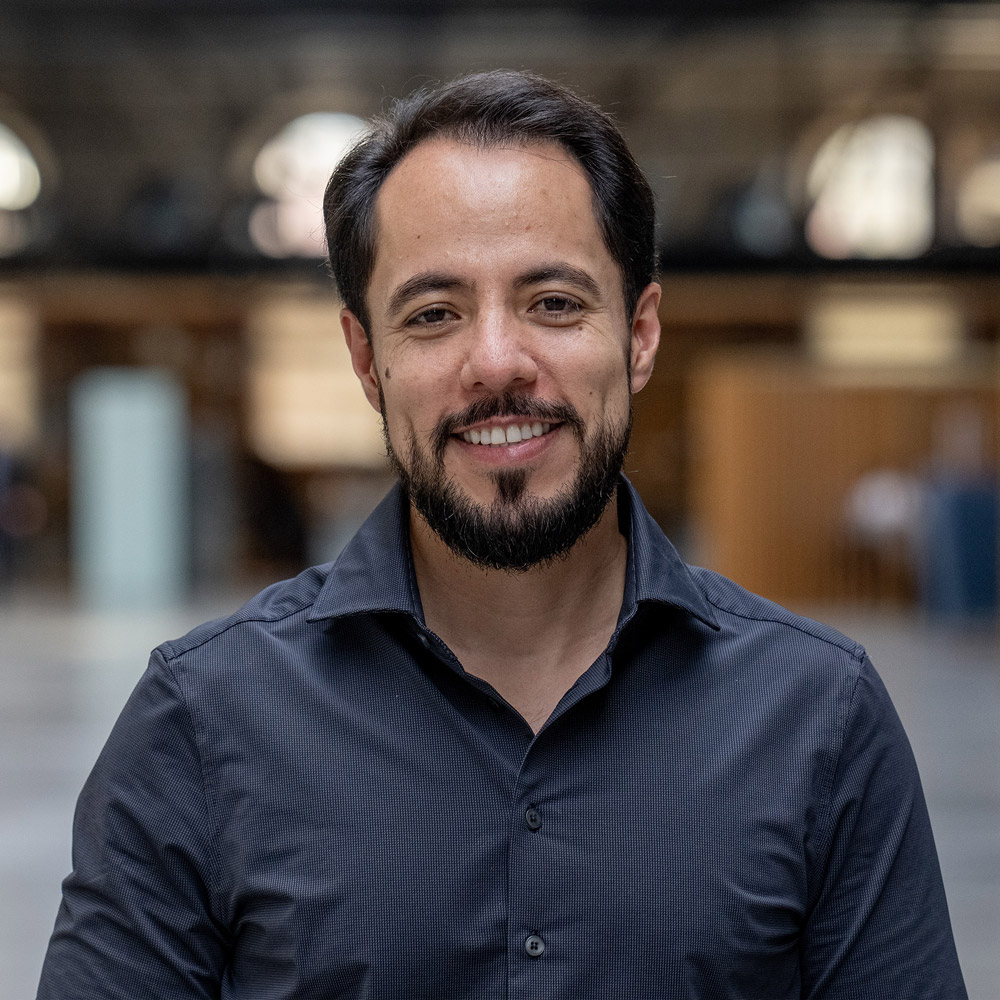
Dr. Leonel Rozo
Originally from Bogota, Colombia, Leonel Rozo is the director of the Physical Holistic Intelligence (PHI) lab at AI4I, where he aims at advancing the next generation of Physical AI systems by building on safe, efficient, and explainable approaches, with applications in dexterous and mobile robotic manipulation, human-robot collaboration, digital twins for robotics, among others. His research has a unique interdisciplinary approach, grounding machine learning and generative AI in the rigouros foundations of differential geometry, control theory, optimal transport, and physics.
Leonel’s career began with a MSc. and a PhD in Robotics and AI from the Polytechnic University of Catalonia (UPC) in Spain, after which he joined the Italian Institute of Technology (IIT) in Genoa, advancing from a postdoctoral researcher to a team leader, time during which he was awarded a Marie Skłodowska-Curie Action (MSCA) individual fellowship. Later, he spent over seven years as a lead research scientist at the Bosch Center for AI (BCAI) in Germany, where he also led a Bosch Industry-on-Campus (IoC) Lab in collaboration with the University of Tübingen. His work has resulted in over 60 peer-reviewed publications in top-tier machine learning and robotics venues (such as NeurIPS, ICML, ICLR, R:SS, T-RO, and IJRR), some of them recognized as best student paper (R:SS’21), runner-up systems paper (CoRL’19), and best presentation paper (CoRL’19). Besides his scientific contributions, Leonel has contributed to more than 20 industrial patents. Moreover, Leonel is co-author of the book “Riemannian Manifolds in Robot Learning, Optimization, and Control” (Cambridge Uni. Press).
Our Team
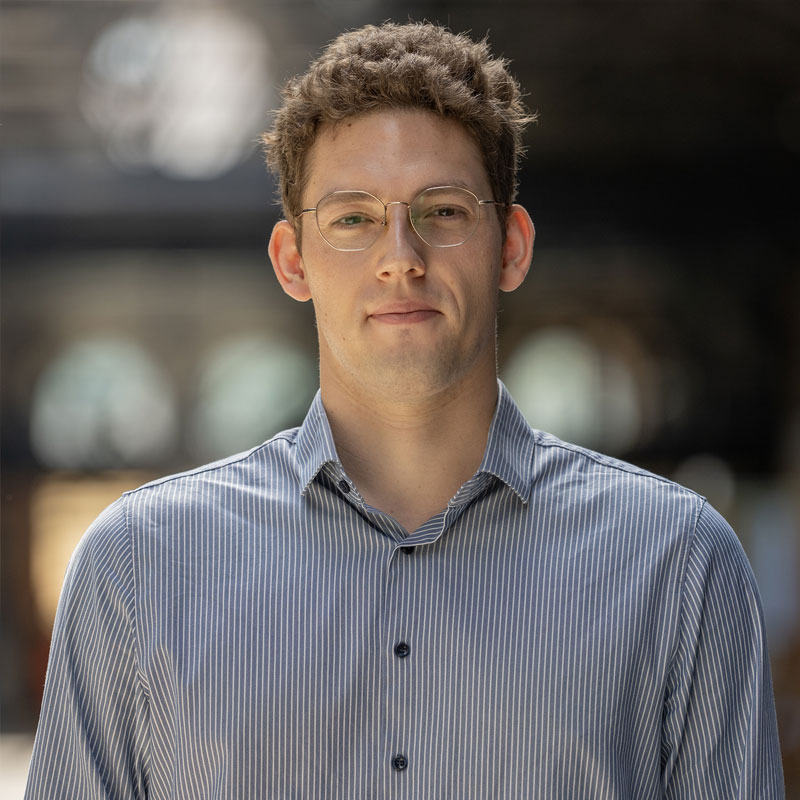
Donatien Delehelle
(Postdoc)
Donatien is currently a postdoctoral fellow at the Physical Holistic Intelligence (PHI) lab led by Dr. L. Rozo. His interests are world models and transformers architectures, specifically how physics-inspired models can be leveraged to better understand these models and consequently improve their compute efficiency and modeling capabilities. His current research is situated at the intersection between differential geometry, physics and deep learning. Before joining AI4I, Donatien obtained a master’s degree in data science at Centrale Lyon (France), and later a PhD from the University of Genoa in 2025, carrying out his research at the Italian Institute of Technology (IIT) under the supervision of Prof. Darwin Caldwell and Dr. Fei Chen.
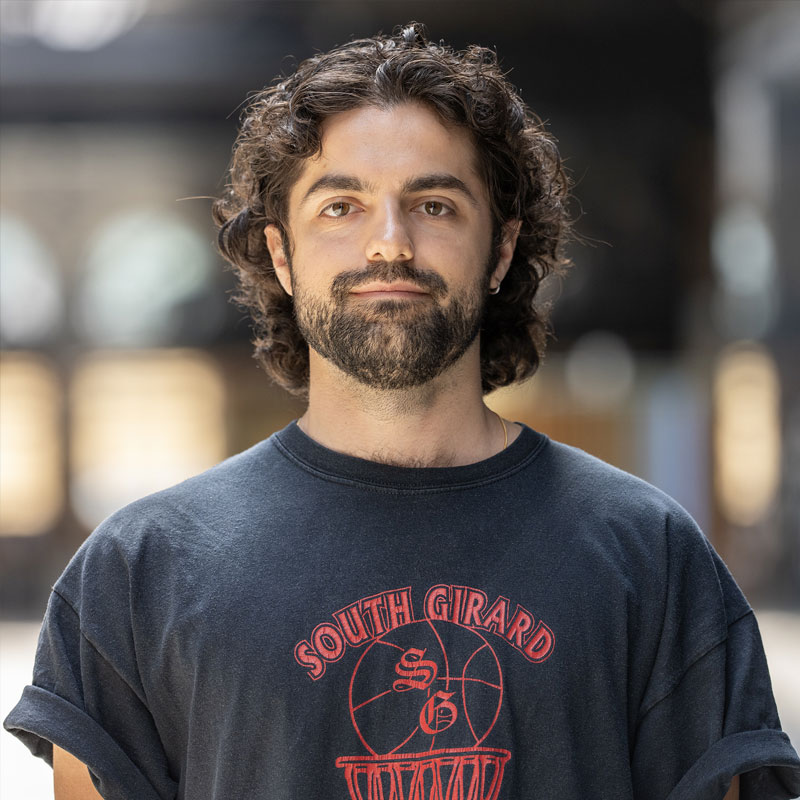
Riccardo Valperga
(Postdoc)
Riccardo is a postdoctoral researcher working on Physical AI with an emphasis on geometric structures and physical reasoning. He holds a degree in Physics from Imperial College London and carried out his PhD in the VISLAB at the University of Amsterdam. His research explores how ideas from physics and differential geometry can inform the design of AI systems that understand, model, and interact with physical systems.
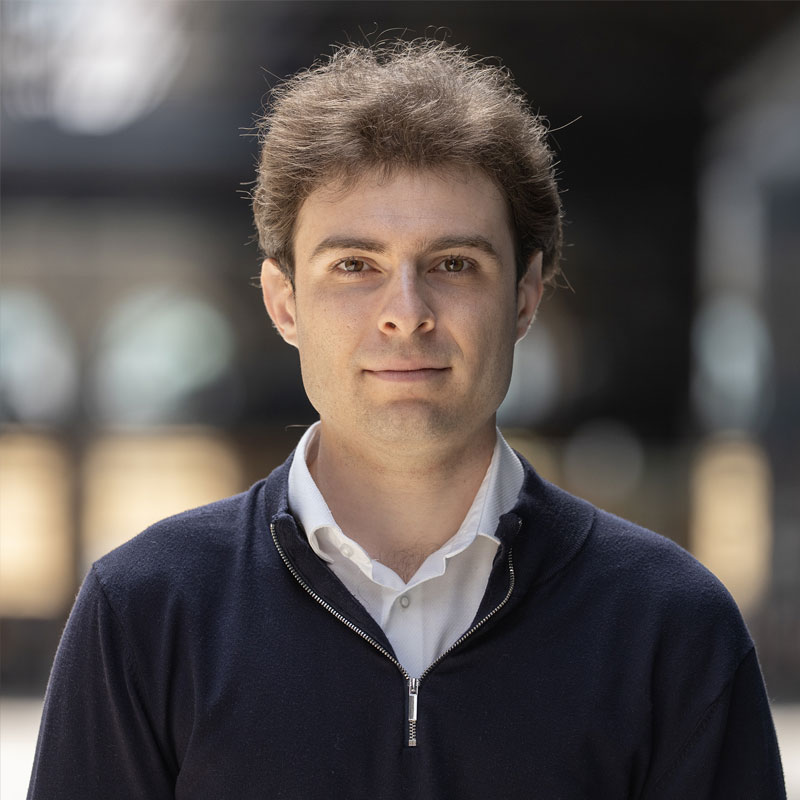
Claudio Moroni
(PhD student)
Claudio Moroni is currently a PhD student at the Physical Holistic Intelligence (PHI) lab of AI4I. His research interests lie at the intersection of Deep Reinforcement Learning, Diffusion Processes, Differential Geometry and Hamiltonian Mechanics. Before joining AI4I, he worked as a Data Scientist and Research Intern, contributing to projects in Graph Machine Learning, Time Series Forecasting, Anti Money Laundering and Language Modeling. He holds B.Sc. and M.Sc. degrees in Physics from the University of Turin, both obtained cum laude.
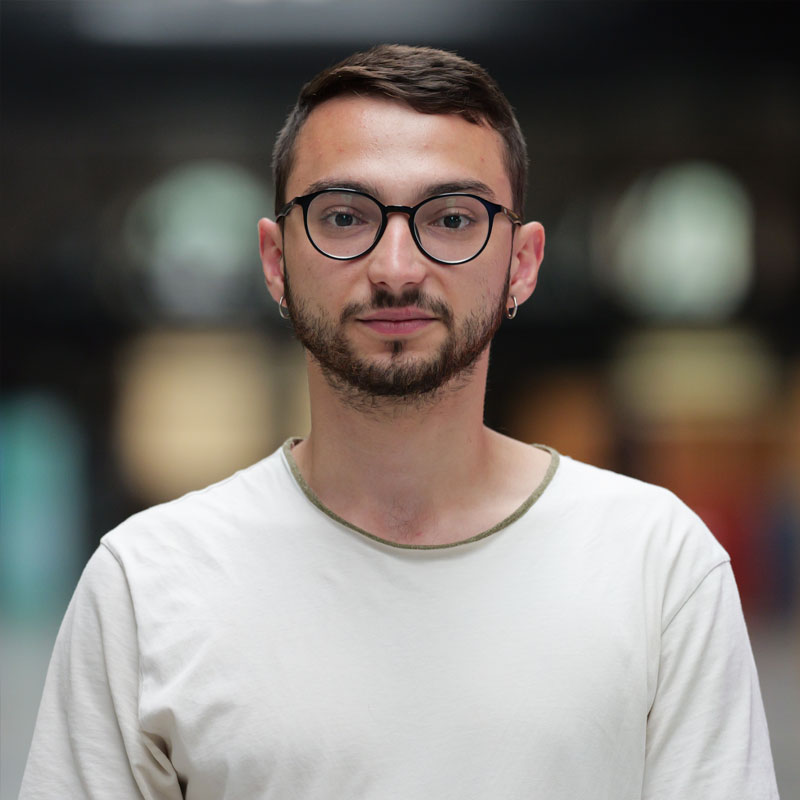
Miguel Rojas Rodriguez
(PhD student)
Originally from Madrid, Spain, Miguel graduated from Physics (BSc.) and Theoretical Physics (MSc.) at Complutense University of Madrid, where he also conducted some early research in mathematical physics. Miguel is currently a PhD student at the Physical Holistic Intelligence (PHI) lab of the AI4I, focusing on geometry and physics-based inductive bias for robust and explainable foundation models.
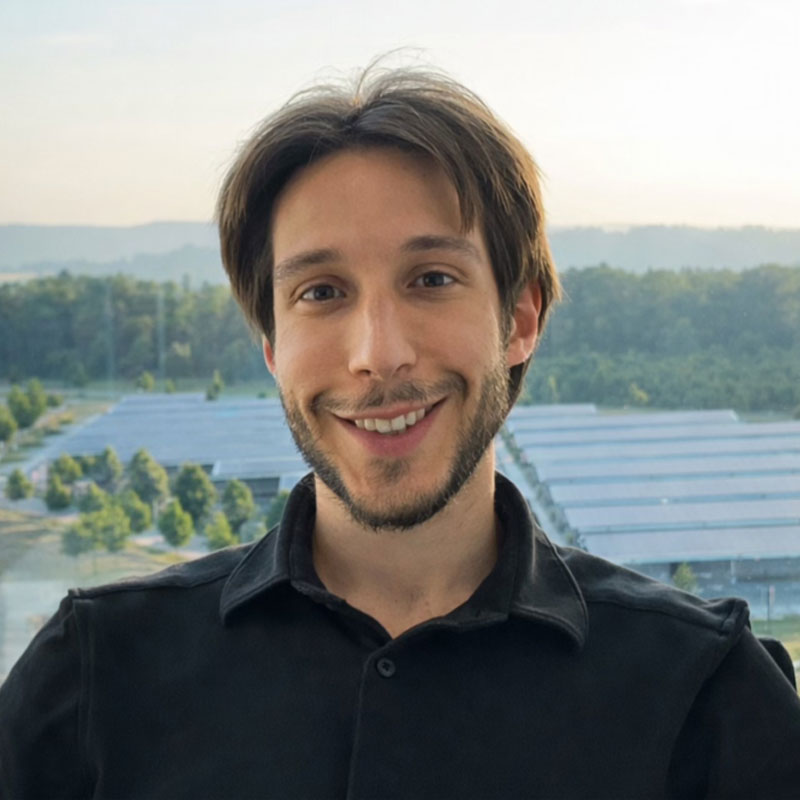
Andrea Testa
(PhD student)
Andrea is a Mechanical Engineering graduate from Politecnico di Milano and is currently pursuing an industrial PhD with the Bosch center for AI (BCAI) and the Karlsruhe Institute of Technology (KIT) in Germany, under the supervision of Dr. L. Rozo (AI4I), Prof. S. Hauberg (DTU), and Prof. T. Asfour (KIT). Before that, Andrea held research roles at the Italian institute of technology (IIT) and Leonardo, in Genoa (Italy). In his PhD research, Andrea leverages geometric representations to enhance how machines learn and reproduce real-world dynamics and generative processes.
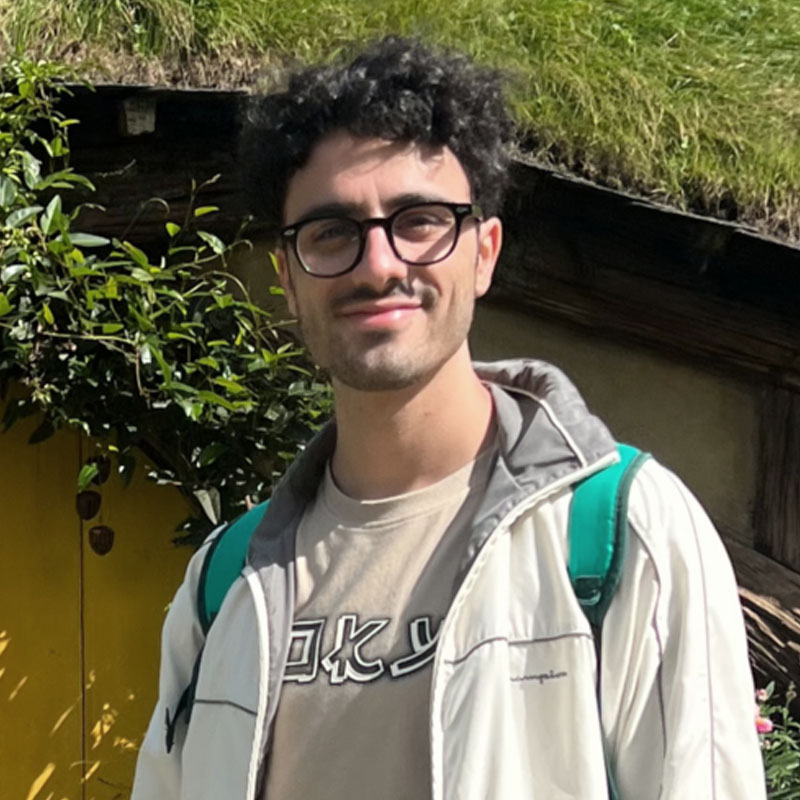
Francesco Donato
(Co-supervised ELLIS PhD student)
Francesco is an ELLIS PhD student at the Italian Institute of Technology (IIT), advised by Lorenzo Natale, and carries out his ELLIS collaboration at the Italian Institute of Artificial Intelligence (AI4I), co-advised by Leonel Rozo. He holds a double MSc in AI and Computer Engineering from Politecnico di Torino and the University of Illinois Chicago, and a BSc in Mechanical Engineering from Politecnico di Torino. His current focus is on tactile representation learning and dexterous manipulation. His interests revolve around how tactile sensing can enhance manipulation, and how differential geometry can help develop related models that are more robust, efficient, and safe, with the long-term goal of capable robot learning at scale.
Albert Lopez i Serrano
(Co-supervised ELLIS PhD student)
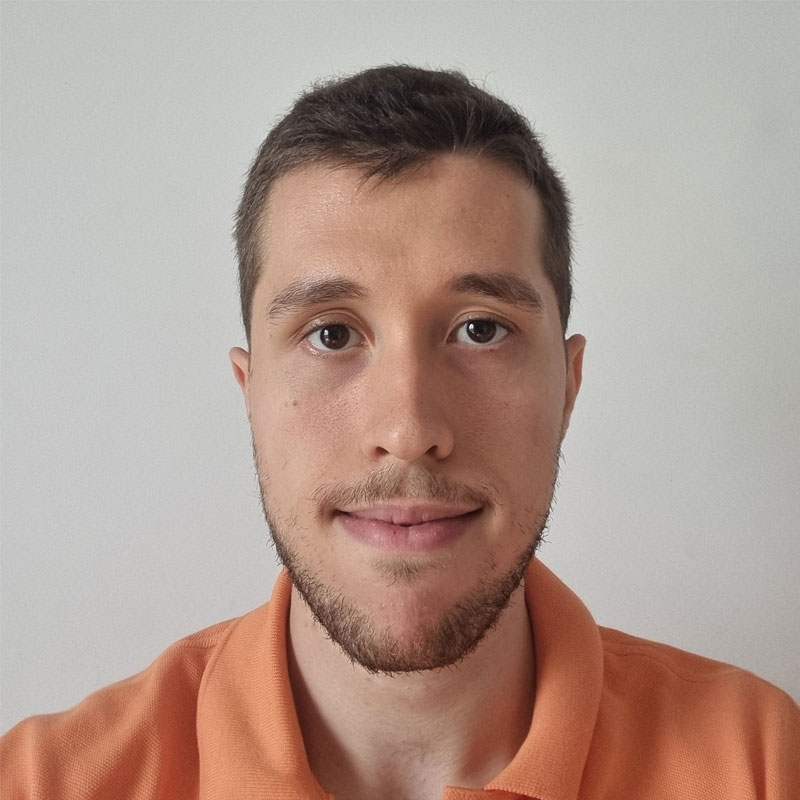
Albert is a Mathematics graduate from the Autonomous University of Barcelona (UAB) and the Institut de Mathématiques de Jussieu-Paris Rive Gauche (IMJ-PRG). He is pursuing a PhD in the section of Cognitive Systems at the Technical University of Denmark (DTU) under the supervision of Prof. S. Hauberg (DTU), Prof. G. Arvanitidis (DTU), and Dr. L. Rozo (AI4I). Before that, Albert held research positions in optimization and AI4Science in different private and public organizations, including the European Space Agency (ESA). In his PhD research, Albert leverages information geometry and Bayesian methods to study compositional generalization, the capability to recombine pre-acquired knowledge into novel concepts and behaviors in autonomous agents. His application focus is developing new techniques for trustworthy and flexible methods for robotics applications.
Francesco Gervino
(Research Fellow)
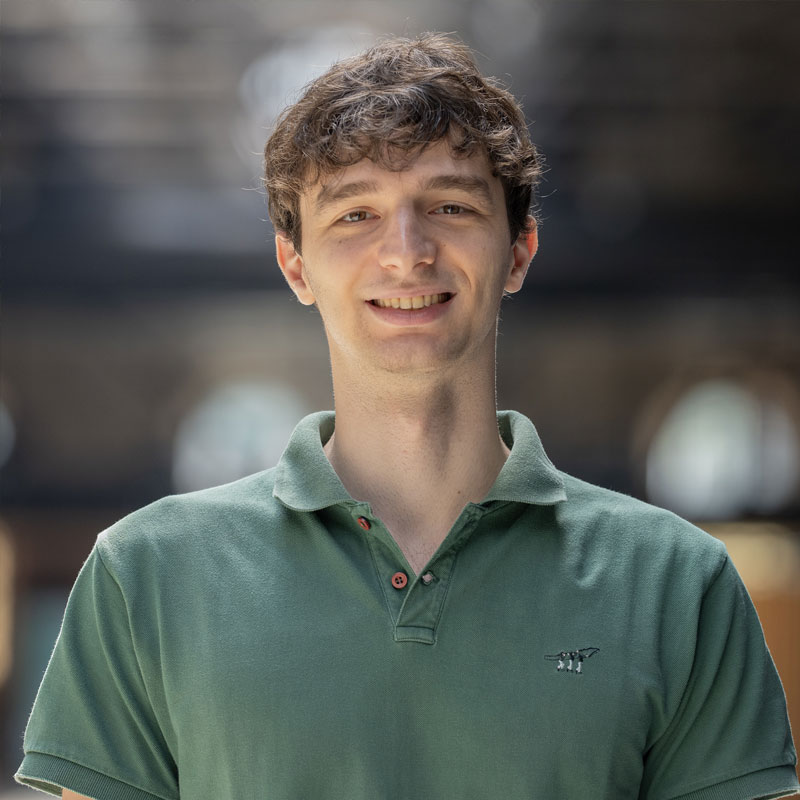
Francesco is currently working on differential geometric world models for robotic manipulation. He holds a bachelor’s degree in electronic engineering and a master’s degree in Mechatronic Engineering, both from Politecnico di Torino. He was also an exchange student at Technion – Israel Institute of Technology. Francesco is passionate about machine learning and its applications in robotics, with a strong interest in the mathematics behind AI. He enjoys exploring how theoretical concepts translate into intelligent, real-world systems.